
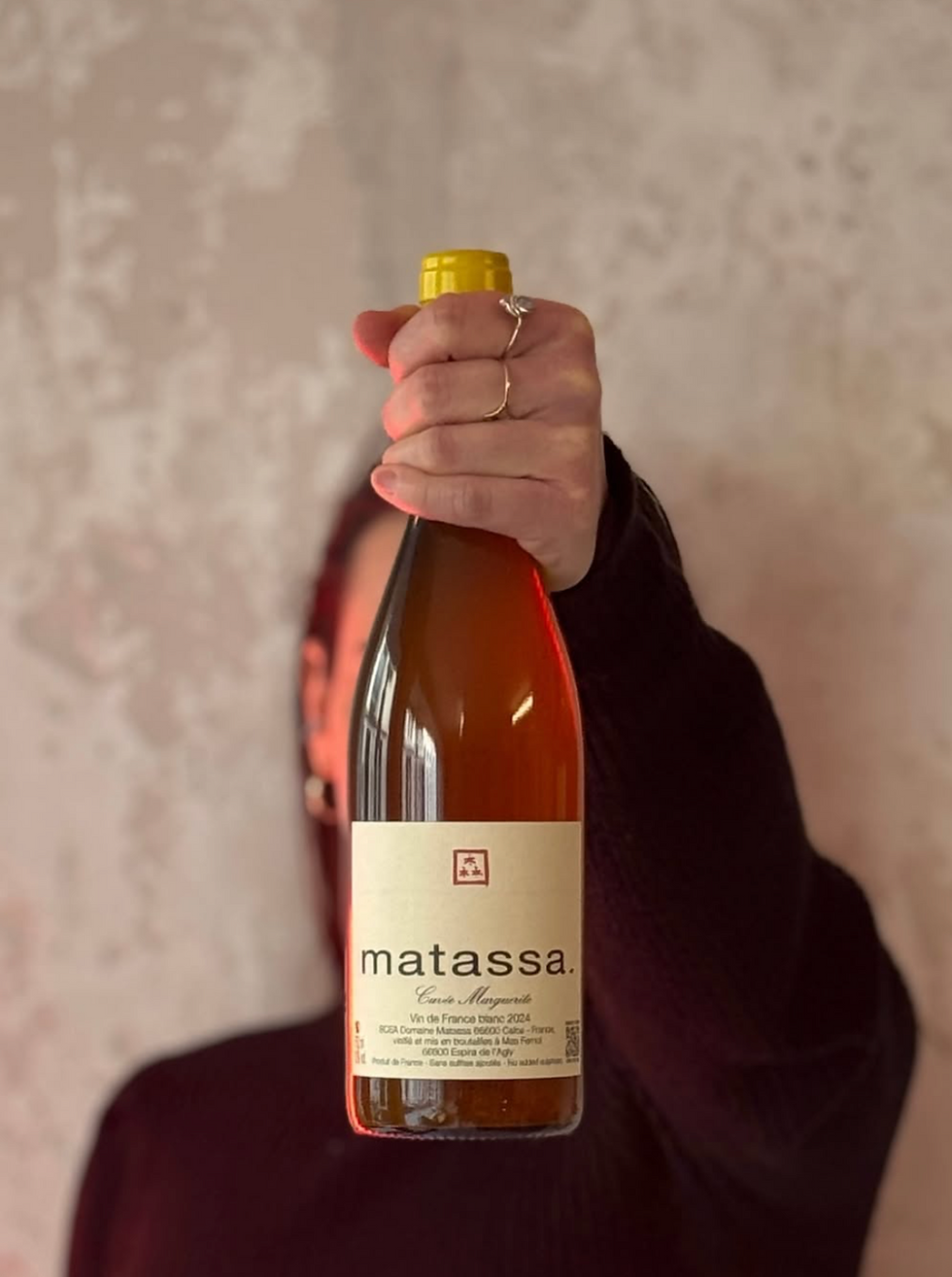
Matassa Cuvée Marguerite
- Luc

- Mar 29
- 2 min read
The Dry Muscat That Redefines Roussillon

Most people get Muscat wrong. They expect something overly aromatic. Floral, obvious, sometimes a bit tiring after one glass. And honestly, they’re not wrong. That’s what Muscat often becomes.
Then you taste Marguerite from Domaine Matassa. And suddenly, the whole idea shifts.
Tom Lubbe isn’t originally from Roussillon.
Who is Tom Lubbe and Why It Matters

He’s South African, and before starting Matassa, he worked with Domaine Gauby, one of the estates that changed the reputation of the region.
At the time, Roussillon was known for powerful, sun-driven wines.
High alcohol, heavy textures, lots of extraction.
Lubbe took a different direction.
He planted and farmed at higher altitude.
Cooler nights. Slower ripening. More natural acidity.
This is key.
Because instead of correcting the wine later in the cellar, the balance is already there in the vineyard.
What Makes Matassa Marguerite Different
Marguerite is made from Muscat, but not in the way most producers handle it.
No overripe fruit.
No aromatic overload.
No attempt to impress.
Instead:
Early harvest to preserve freshness
Gentle pressing to avoid extracting too much
Clean vinification to keep precision
Minimal intervention, but controlled
This is not “natural wine gone wild.”
This is controlled, deliberate winemaking with restraint.
Tasting Notes, A Different Expression of Muscat
Forget the usual Muscat profile.
Marguerite is tighter. More focused.
You’ll find:
Lemon zest, not ripe citrus
Fresh herbs, slightly wild
A subtle green almond bitterness
A dry, mineral, almost saline finish
It’s light in body, but structured.
The kind of wine that doesn’t tire your palate.
It sharpens it.
Why This Wine Stands Out in Roussillon

Roussillon can easily produce big wines.
That’s the default.
What’s rare is restraint.
Matassa Marguerite is a perfect example of what happens when:
altitude replaces heat
timing replaces ripeness
precision replaces power
This is why sommeliers pay attention to it.
Not because it’s trendy.
Because it’s balanced.
Food Pairing — Where It Works Best
This style of dry Muscat is extremely versatile.
At Gu Wine Bistro, this is where it shines:
seafood, especially oysters or raw dishes
light starters with herbs and citrus
fresh cheeses
anything where you want tension, not weight
It’s also a perfect first glass.
Or the bottle that finishes faster than expected.
Final Thought

If you think you don’t like Muscat, you probably just haven’t had one like this.
Matassa Marguerite doesn’t try to convince you.
It just shows you another side of the grape.
And once you see it, it’s hard to go back.
That was the idea I had in my head. Then I tasted Marguerite.


Comments